

 By iCarsoft Official Store Technical Team, Automotive Diagnostics Editors · Updated October 8, 2026 · Technical sources checked
Quick Answer
The C003E code identifies a rear wheel-speed sensor supply family in the cited mapping. It does not establish the number or location of sensors, a nominal voltage or a failed part. First identify the monitored rear channel, then verify its electrical-support path under the OEM test conditions.
What Does the C003E Code Mean?
NHTSA report DOT HS 812 575 lists C003E as Rear Wheel Speed Sensor Supply in a selected SAE interface-code table. It includes a subfault and does not designate left or right. The complete OEM description and VIN wiring diagram determine the actual circuit to diagnose. The full fault record determines the test branch.
A rear sensor supply may be described differently from a dedicated left- or right-rear channel. Do not combine the two sides in the wiring diagram because a generic scan description simply says rear. Trace the actual controller terminals to the component named in the service procedure. The harness layout, connector identification and controller variant must agree before a technician applies any circuit test.
Test conditions are part of the result. Write down whether the sensor was connected, which reference point was used and whether the controller was awake or shut down as required. An unloaded check and a connected-circuit check may have different purposes. Comparing values from different conditions as though they were equivalent can lead to a false diagnosis of either the sensor or its power source.
The public source used here establishes a selected code label, not a model-specific C003E diagnostic procedure. It cannot authorize a sensor swap, supply jumper, module replacement or universal test value. Consult current manufacturer information for the full fault, including its suffix. If the OEM description differs, preserve that difference and follow the vehicle-specific procedure instead of forcing the generic label onto the vehicle.
A scan-tool supply-related label and a wheel-speed reading are different kinds of evidence. A controller may report data that becomes unavailable during a circuit fault, but the data alone does not locate a broken wire or identify the source of electrical loading. Use the permitted tests to connect the observed fault to a physical circuit. Save the original state before disconnecting anything.
Separate C003E from adjacent fault families
| Code | General description | Key distinction |
|---|---|---|
| C003E | Rear Wheel Speed Sensor Supply | Rear channel and circuit require OEM identification. |
| C003D | Rear Wheel Speed Sensor | Sensor-path label, not automatically a supply-path failure. |
| C003C | Rear Tone Wheel | Rotating-reference family, not an electrical supply specification. |
| C003B | Right Rear Wheel Speed Sensor Supply | Side-specific selected label; do not interchange it with an unspecified rear channel. |
Record the complete C003E description. Use the exact module, suffix and OEM procedure to select the test path.
C003E Symptoms and Likely Causes
Record C003E symptoms and fault status; symptoms alone cannot identify a failed part.
Check whether companion faults share a proven cause.
The vehicle may report limited brake-control assistance. Record the exact warning and consult the owner manual. Assess actual braking separately; the code does not establish a safe distance or guarantee normal assistance.
A supported controller data list may show an unavailable or implausible rear-speed channel. Confirm that the PID corresponds to the actual monitored component before connecting that observation to a particular wheel or axle.
Supply and signal complaints may appear together. Keep their status and timing. A common electrical cause requires circuit evidence, and separately recorded faults must not be discarded simply because their wording appears related.
Document wheel-end, axle, harness or brake work and any battery events. Inspect the affected installation. Timing alone does not prove a new component is wrong or that a previous repair created the fault.
Practical cause-checking order
- Channel identification: Confirm the OEM definition, suffix and sensor arrangement before deciding which circuit is implicated. A generic rear label does not identify both rear sensors, and it cannot substitute for the wiring diagram matching the installed controller and vehicle configuration.
- Connector integrity: Inspect connector locks, seals, terminal condition and approved repair joints. A connector can appear seated without establishing reliable contact. Use the specified terminal checking method; oversized probes can create a new fault and undermine the original evidence.
- Harness condition: Trace the identified harness through accessible movement and damage areas. Check retainers, chafing and prior repairs. Follow the prescribed connection state for continuity, isolation or loaded testing rather than treating a visual concern as proof of the electrical failure.
- Component loading: Where the manufacturer permits component isolation, record how the circuit responds with the specified load present or removed. Do not energize an unknown sensor or attach an improvised substitute load. Interpret the result against the actual circuit design.
- Source-side operation: If evidence points toward the controller side, verify its required powers, returns and operating state before an internal-failure decision. Use the approved diagnostic sequence and setup requirements. A missing scanner function does not demonstrate a failed vehicle output.
Did C003E appear after recent rear axle, wheel-speed wiring, sensor or brake service? Recheck the documented connections, parts and setup steps affected by that work. Record battery and software history; a post-repair code does not prove the new part is defective.
How Serious Is C003E, and Can You Drive?
Arrange prompt brake diagnosis and follow the owner manual. Do not assume ABS or stability assistance remains available. Abnormal pedal effort, pulling, fluid loss, dragging or a red brake warning requires stopping safely and arranging recovery. The code cannot establish a safe driving distance.
Record brake warnings, pedal changes, fluid loss and recent service. Do not induce wheel slip or emergency braking to test assistance on public roads; warning-state assessment comes before any functional verification.
Stop and arrange a tow if braking changes, pedal effort or travel is abnormal, a wheel drags, fluid leaks or a red brake warning appears.
Follow the exact shutdown and pressure-release procedure before accessing brake components. Support a raised vehicle securely, keep clear of moving parts and never energize unidentified circuits. Do not perform public-road emergency-stop experiments.
How to Diagnose C003E in the Right Order
-
Capture the full rear-supply fault
Save C003E with its complete suffix, storing module, status and available event data. Capture companion codes and the warning history before clearing or disconnecting components. Establish brake and wheel safety first. If pedal behavior, fluid loss, dragging or a red brake warning makes the vehicle unsafe, arrange recovery. Diagnostic evidence gathering does not justify driving an unsafe vehicle to recreate a fault.
-
Identify the exact monitored supply
Match the VIN, controller variant and complete code to the current wiring diagram and service procedure. Identify the actual rear sensor, source terminal, return or reference point and permitted test connections. Do not assume a universal wire count or voltage. If the scan description and service diagram disagree, resolve that identification problem before touching terminals or authorizing a replacement.
-
Inspect the installation and connections
Secure the vehicle and follow shutdown requirements before accessing wiring. Inspect connector seating, seals, retainers and cable clearance around the identified assembly. Record contamination or prior repairs before disturbing them. Check the areas affected by recent work without assuming they caused the fault. Avoid opening the hydraulic system or dismantling wheel-end parts unless the applicable diagnostic branch requires it.
-
Measure the circuit in the specified state
Perform the OEM supply-path test with the prescribed connection state, reference point and controller condition. Record actual measurements and their limits from the service information. Use a loaded test only with the approved equipment and method. An unqualified voltage reading is not a diagnosis. Do not transfer a reference-voltage value from an unrelated engine sensor to this wheel-speed circuit.
-
Separate external loading from the source
Follow the authorized isolation sequence to distinguish connector or harness loss, component loading and a source-side fault. Keep a record of each changed connection and its result. Never bridge protection, apply battery power to an unidentified terminal or substitute a fuse rating. If the necessary circuit test is unavailable or unsafe, document the unresolved branch and seek appropriately equipped diagnosis.
-
Verify repair and related speed information
Repair only the demonstrated defect and restore seals, routing and terminal retention. Complete the required setup, then repeat the test that originally failed. Confirm appropriate rear-speed information and brake-system operation using the manufacturer verification procedure. Save the final scan and any untested conditions. A cleared code with no repeat of the original conditions is a limited observation, not proof of a permanent repair.
Specifications are vehicle-specific. Use the exact VIN specifications, approved test points and required operating state. No generic value or drive cycle can replace the applicable procedure. Manufacturer examples here do not establish specifications for other applications.
C003E Repairs and Cost Planning
A C003E repair must address the demonstrated failure. Do not replace an assembly from the code alone.
Recheck installation and required setup after repair. When multiple wheel-speed codes appear, use the wiring diagram to decide whether they could share an electrical path. Similar wording and simultaneous timestamps are useful leads, not proof of a common feed. Conversely, one failed supply branch can create secondary signal complaints. Preserve all codes, follow the OEM priority order and reassess the companion records after the demonstrated primary defect has been repaired.
Ask the shop to name the failed branch and the measurement supporting each proposed repair.
Authorize diagnosis before parts while the cause remains uncertain.
| Possible path | Quote basis |
|---|---|
| Repair the connector or harness after a documented circuit failure | VIN-specific quote |
| Correct the demonstrated physical or installation fault | VIN-specific quote |
| Replace only the component that fails its prescribed test | VIN-specific quote |
| Complete required setup and safe functional verification | VIN-specific quote |
Request an itemized, VIN-specific quote for the proven repair, setup and verification. Check applicable warranty coverage.
Using iCarsoft CR Max P for C003E
On a supported vehicle, iCarsoft CR Max P can save accessible faults, available freeze frame, live data and diagnostic reports. Preserve the C003E evidence before clearing.
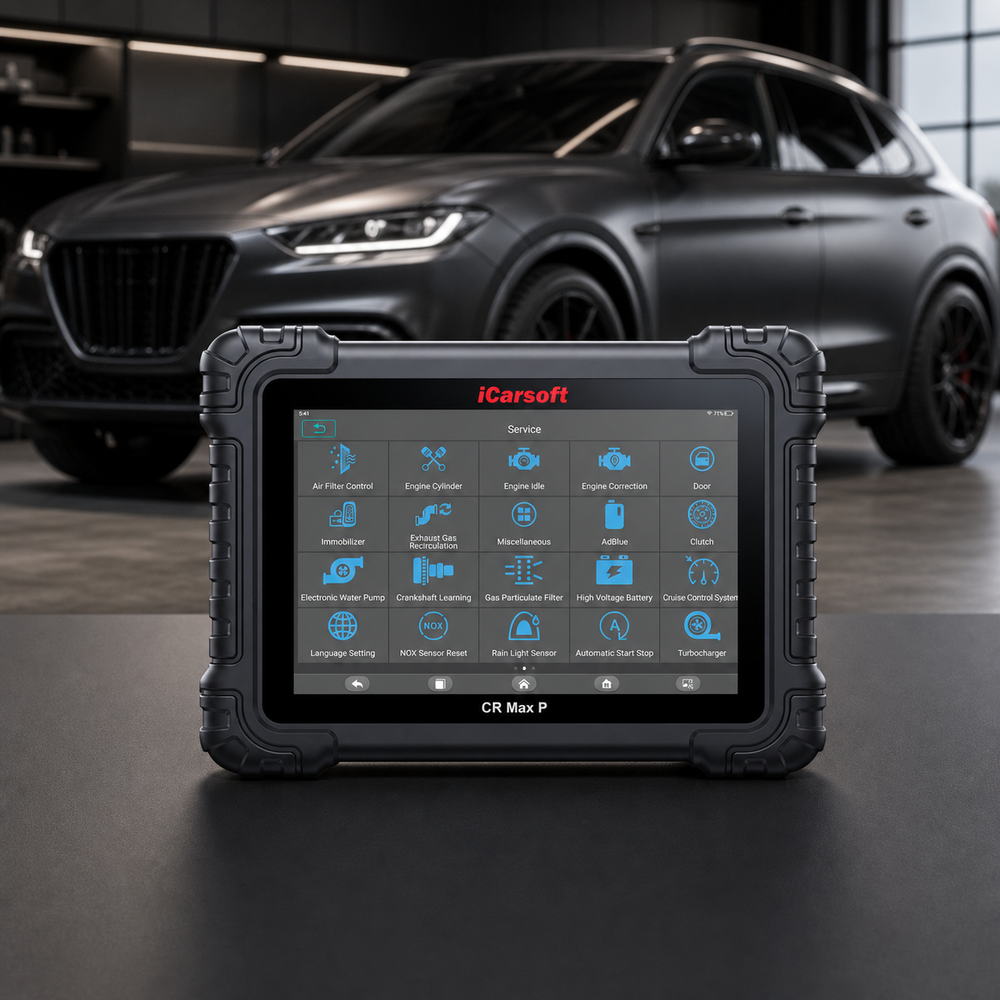
Preserve the rear speed-sensor electrical supply evidence
iCarsoft CR Max P
Review supported codes and relevant live data together. Confirm the exact VIN, controller access, PIDs and any requested active test with iCarsoft before purchase; generic product capabilities do not guarantee a C003E-specific function.
Check current CR Max P price and availabilityCheck CR Max P compatibility by VINConfirm the exact VIN, controller, requested function and software with iCarsoft before purchase. Follow OEM testing prerequisites.
Know the measurement boundary. ECU-reported data does not replace the independent electrical, mechanical or functional measurements required by the applicable service procedure.
Verify the C003E Repair
After repair, verify connectors, harness clearance, setup and controller supply. Save post-repair findings, then clear only erasable records through the approved procedure. Battery disconnection is not a repair.
Run the manufacturer's applicable verification conditions in a safe workshop or route. Compare the original operating state with current data for the rear speed-sensor electrical supply, and check current and pending faults in related modules. One clean start or idle period does not prove that every conditional monitor has completed.
If C003E returns, compare its suffix, status, failure order and operating conditions with the saved baseline before replacing another part. Revisit the failed branch and inspect anything disturbed. Confirm the prescribed brake-system verification separately from code clearing.
Stored and Active brake-control faults require different decisions. Preserve the original record and follow the OEM confirmation procedure. A cleared display does not prove restored assistance or safe braking.
Related Brake and Wheel-Speed Code Guides
Use each related code's own diagnostic procedure.
C003E Frequently Asked Questions
Does C003E mean both rear sensors have lost power?
No. The cited generic mapping says Rear Wheel Speed Sensor Supply without identifying a side or the number of sensors. Use the full OEM fault and wiring diagram to identify the monitored circuit. Do not replace two sensors or assume a shared feed from the word rear alone.
What should I check first for C003E?
Preserve the complete module record and available event data. Confirm the full OEM description, actual architecture and recent work before selecting the required electrical or physical test.
Can I drive with the C003E code?
Follow the owner manual and actual brake warnings. Stop safely for abnormal braking, fluid loss, dragging or a red brake warning. The code cannot establish safe mileage.
Why did C003E return after a part was replaced?
Intermittent faults need a documented limitation if the original condition cannot be safely repeated. Inspect cable movement areas, retainers and prior repairs without pulling on terminals or introducing new damage. Record what was inspected and what remained inaccessible. A quiet warning lamp after a connector has been disturbed does not establish which contact failed or prove that the fault will not return.
What should a C003E repair estimate include?
Request failed-test evidence and itemized diagnosis, parts, labor, setup and verification costs. The code cannot determine the price.
Can CR Max P diagnose and clear C003E?
On a supported vehicle, CR Max P can organize available faults, freeze frame, live data and reports, and can clear erasable records after repair. Confirm exact ECU coverage. It cannot establish safe braking from an erase command or replace physical measurements for the rear speed-sensor electrical supply.
The iCarsoft Official Store Technical Team maintains the store's fault-code library. This guide organizes published technical references and verified product information; it does not document a hands-on test of a particular vehicle or claim an individual engineer's review.
Technical and cost references
- NHTSA DOT HS 812 575 — Functional Safety Assessment of a Generic Electric Power Steering System. August 2018; Appendix L, Table L-2 identifies C003E Rear Wheel Speed Sensor Supply as a selected SAE label. It does not define the vehicle circuit or repair specifications.
Product information: Official iCarsoft CR Max P page.
Editorial note: Diagnostic education does not replace the owner manual, current VIN-specific service information or professional inspection. Procedures, coverage and costs vary. Related guides provide context, not interchangeable repair instructions. No universal failure rate, price or outcome is implied.


